Menu
Menu



Top Ranked Fencers
Epee
 Sera SONG
When and where did you begin this sport?
She began fencing at junior high school in Geumsan County, Republic of Korea.
Why this sport?
Her physical education teacher suggested the sport to her.
Learn more→ Gergely SIKLOSI
When and where did you begin this sport?
He began fencing at age seven. "I was doing it for fun until around 14 when I beat the Hungarian No. 1 at that time, and realised that this is serious, for real."
Why this sport?
"When I first tried [fencing], I felt like 'this is me'. Fencing is not only about physical or technical capabilities, it's also about mind games. It's not the fastest or the strongest who wins. It's the one who can put the whole cake together."
Learn more→Foil
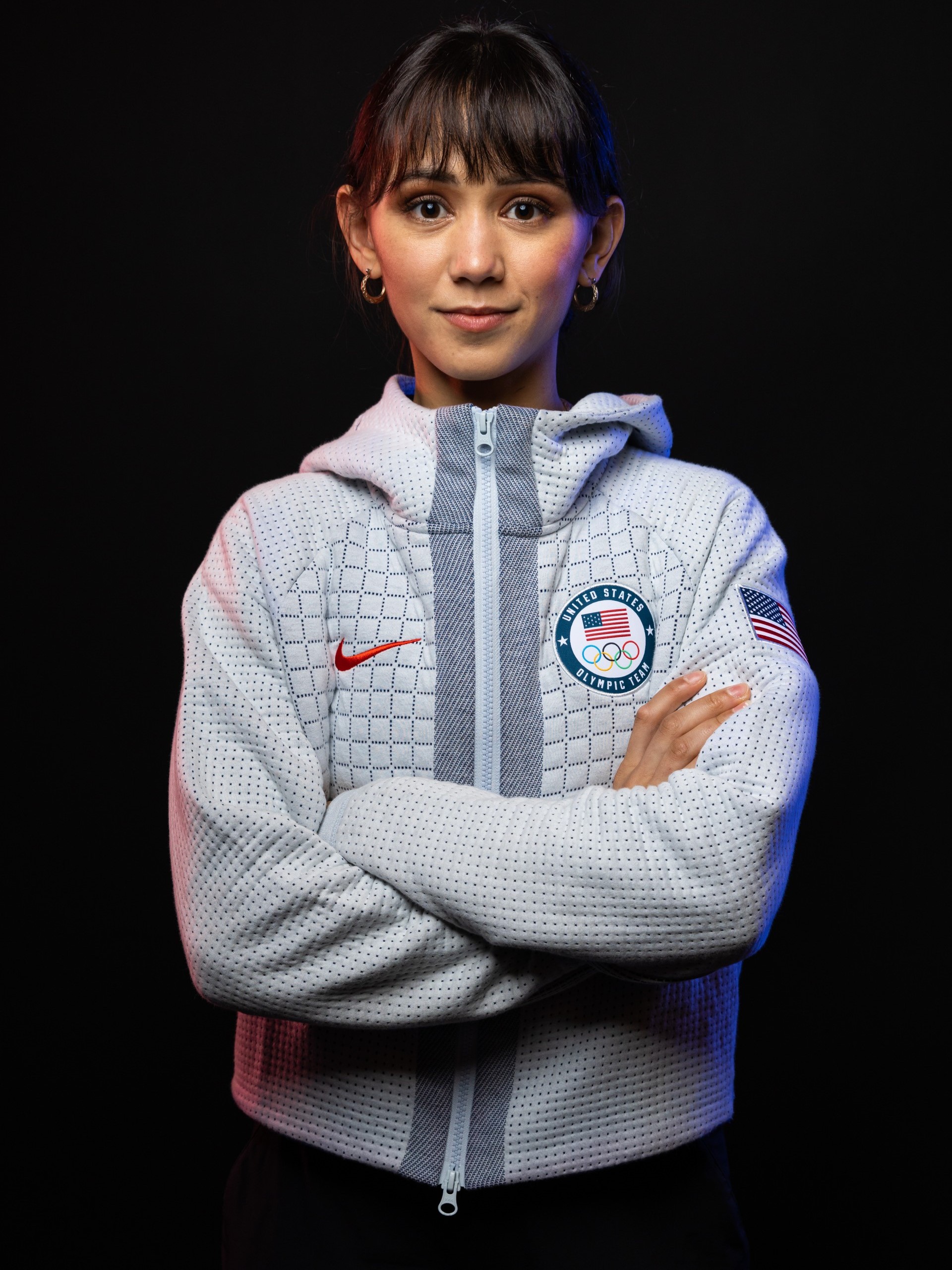 Lee KIEFER
When and where did you begin this sport?
She began fencing at age six after watching her father fence at a local competition. "My siblings and I thought the sport was strange and interesting-appearing, so my dad started teaching us the basics in our empty dining room and taking us to a club twice a week that was 1.5 hours away from where we lived."
Why this sport?
She and her brother and sister followed their father, Steve Kiefer, into the sport. "Growing up my dad decided that he wanted to take up fencing again. He hadn't picked up a foil in 10 or 15 years, and me and my siblings watched him compete at a local tournament. Then he asked if we wanted to try it, and we said yes. Twenty years later I'm still doing it."
Learn more→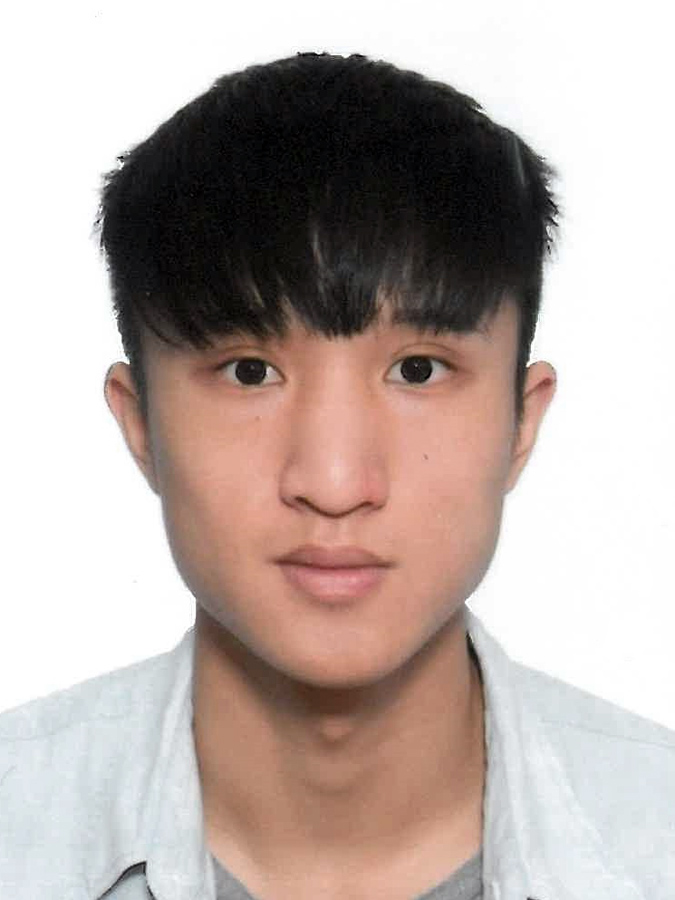 Chun Yin Ryan CHOI
When and where did you begin this sport?
He began fencing in grade four of primary school.
Why this sport?
His mother forced him to go to a fencing lesson. "I didn't really want to go, but my mother made me because it was run by a friend of hers and they wanted more students. But, after the class, I loved it and wanted to continue."
Learn more→Sabre
 Misaki EMURA
When and where did you begin this sport?
She began fencing at age nine.
Why this sport?
She was encouraged to try the sport by her parents, and went to a fencing class where her father coached. She took up foil in grade three of primary school, but competed in sabre at a competition which had a prize of a jigsaw puzzle. She then switched to sabre before starting middle school.
Learn more→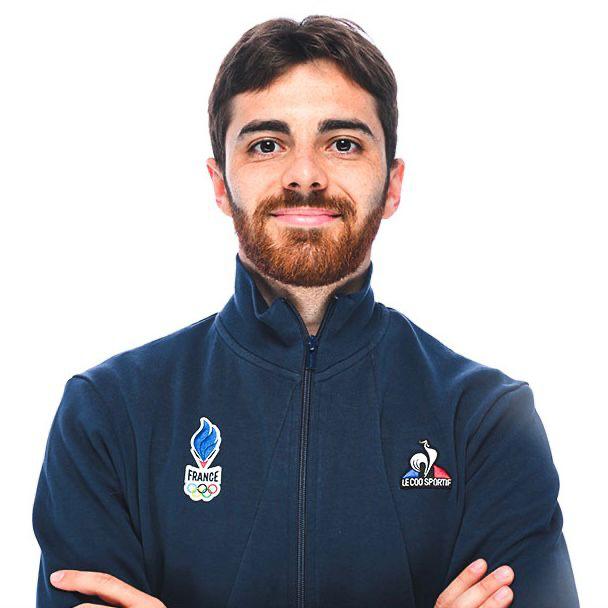 Jean-Philippe PATRICELearn more→
Results & Competitions
Latest Results
| Competition | Date | Weapon | Gender | Cat |
|---|---|---|---|---|
| Padua | 2026-03-08 | sabre | M | |
| Athènes | 2026-03-08 | sabre | F | |
| Cairo | 2026-03-08 | foil | F | |
| Cairo | 2026-03-08 | foil | M | |
| Padua | 2026-03-06 | sabre | M |
Upcoming Competitions
| Competition | Date | Weapon | Gender | Cat |
|---|---|---|---|---|
| Budapest | 2026-03-13 | epee | M | |
| Budapest | 2026-03-13 | epee | F | |
| Lima | 2026-03-20 | foil | M | |
| Lima | 2026-03-21 | foil | F | |
| Astana | 2026-03-26 | epee | M |
Addresses singularities and the residue theorem for evaluating contour integrals. 2. Special Functions (Bessel and Legendre)
He slowed down. He picked up his pen. He stopped fighting the book and started following it. He let the methodology of the Kumbhojkar edition guide him. He focused on the method of separation of variables .
This paper provides an overview of the core mathematical concepts and pedagogical features of Engineering Mathematics 4
For engineering students across numerous universities in India—particularly those affiliated with the University of Mumbai (MU) and other state technical universities—the subject of often represents a significant leap in complexity. Among the various textbooks available, the name Dr. P. N. Kumbhojkar stands out. His book, commonly referred to as Engineering Mathematics 4 by Kumbhojkar Edition , has become a cornerstone resource for second-year engineering students.
New and used copies are available through retailers like Amazon India and student-focused platforms like Clankart . engineering mathematics 4 by kumbhojkar edition
Every complex mathematical proof is broken into logical, sequential steps.
Complete Guide to Engineering Mathematics 4 by G.V. Kumbhojkar
This article provides a detailed overview of this edition, covering its core topics, unique features, and why it remains a top choice for students in 2026. 1. Why Choose Kumbhojkar Mathematics 4?
“Engineering is not about the answer, Rohan,” a voice seemed to echo from the binding. It sounded suspiciously like a strict Marathi professor. “It is about the discipline of the process.” He picked up his pen
This public link is valid for 7 days and shares a thread, including any personal information you added. This link or copies made by others cannot be deleted. If you share with third parties, their policies apply. Can’t copy the link right now. Try again later.
Sometimes, the best insights come from your professors or academic peers. They might have used the book or have access to reviews.
Because Kumbhojkar publishes specific versions for different engineering branches, ensure you select the one matching your department:
: Problems range from simple formula-application tasks to highly complex design questions. He focused on the method of separation of variables
Applied in logistics, supply chain engineering, and resource allocation. Edition-Specific Updates: What’s New?
: Chapters conclude with actual questions from past university exams.
Focuses on eigenvalues, eigenvectors, and the Cayley-Hamilton theorem. It covers essential matrix diagonalization techniques used in structural and systems analysis.
Explains numerical solutions for partial differential equations. Target Audience and University Alignment The book is tailored for second-year engineering students.
The Kumbhojkar edition is structured around five primary mathematical domains tailored for advanced engineering analysis: Linear Algebra (Theory of Matrices)